

In industrial piping systems, effective flow isolation is critical for ensuring safety, operational efficiency, and equipment protection. Among the many valve types available, stainless steel gate valves are widely recognized for their durability, corrosion resistance, and dependable shutoff performance. Designed primarily for fully open or fully closed service, a gate valve provides minimal flow restriction and excellent sealing capabilities, making it a preferred solution across numerous industries.
Whether used in water treatment facilities, chemical plants, oil and gas operations, or manufacturing systems, stainless steel gate valves offer long-term reliability in demanding environments. As a trusted valve manufacturer, WSV provides high-quality valve solutions designed to meet the performance requirements of modern industrial applications.
A gate valve operates by raising or lowering a gate-shaped disc within the valve body. When the handwheel or actuator is turned, the stem moves the gate upward to allow flow or downward to stop it completely.Unlike globe valves or control valves, a gate valve is not designed for throttling. Instead, it functions as an isolation valve that should remain either fully open or fully closed. When fully open, the gate is completely removed from the flow path, creating a straight-through passage with minimal pressure loss.Stainless steel gate valves utilize stainless steel components for the body, bonnet, stem, and gate. This construction provides excellent resistance to corrosion, oxidation, and chemical attack, making them suitable for harsh operating environments. The robust design also enables the valve to withstand high temperatures and pressures while maintaining reliable sealing performance.
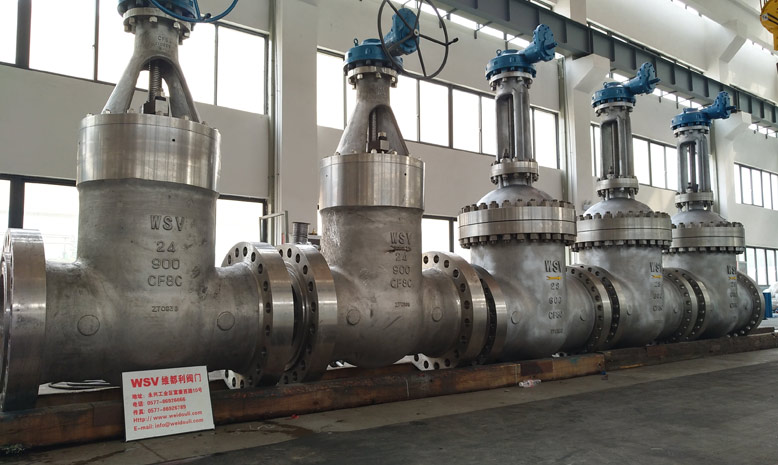
The popularity of stainless steel gate valves stems from several key advantages that support reliable industrial operation.
Corrosion Resistance: Stainless steel performs exceptionally well in environments exposed to water, chemicals, steam, and other corrosive media, reducing maintenance and extending service life.
Excellent Flow Efficiency: When fully open, the gate retracts completely from the flow path, resulting in minimal pressure drop and maintaining system efficiency.
Durability: Superior mechanical strength allows operation under challenging pressure and temperature conditions, while the simple internal structure ensures long-term reliability.
Choosing the right valve depends on the application requirements and operating conditions.A stainless steel gate valve is often the preferred choice when complete flow isolation is required. Because the gate provides a full-bore opening when fully open, the valve minimizes turbulence and pressure loss. This makes it particularly suitable for main pipeline isolation applications.Compared with a ball valve, a gate valve may be advantageous in larger pipe sizes where cost considerations and flow efficiency are important. Gate valves are also commonly selected for systems that do not require frequent operation.However, if precise flow regulation or throttling is needed, other valve types such as globe valves or control valves may be more appropriate. Since partial opening can cause vibration and seat wear, gate valves should generally not be used for flow control purposes.For applications involving aggressive chemicals, high temperatures, or corrosive fluids, stainless steel gate valves provide an excellent balance of durability and performance.
Numerous industries rely on stainless steel gate valves to maintain safe and efficient operations.
Municipal water systems and industrial water treatment facilities use gate valves to isolate pipelines, pumps, and storage equipment. Their corrosion resistance ensures long service life in water applications.
Chemical plants often handle corrosive substances that require durable valve materials. Stainless steel gate valves help maintain process integrity while resisting chemical attack.
From upstream production facilities to downstream processing plants, gate valves play a critical role in pipeline isolation and equipment protection. Their ability to withstand demanding operating conditions makes them highly valuable in this industry.
Power plants utilize stainless steel gate valves in steam systems, cooling water circuits, and auxiliary process lines where reliable shutoff is essential.
The hygienic properties of stainless steel make these valves suitable for food processing and beverage production systems that require clean and corrosion-resistant components.
Selecting the wrong valve can result in performance issues, increased maintenance costs, and reduced service life. Avoiding common mistakes helps ensure optimal results.One common mistake is choosing a valve solely based on pipe size without considering pressure and temperature requirements. Always verify that the valve's specifications match the operating conditions.Another error is overlooking material compatibility. While stainless steel offers excellent corrosion resistance, different grades perform differently depending on the media being handled. Selecting the appropriate material grade is essential.Many buyers also underestimate the importance of industry standards and certifications. Valves should comply with relevant standards to ensure safety, reliability, and long-term performance.Additionally, using a gate valve for throttling applications can significantly reduce valve life and compromise sealing performance. Stainless steel gate valves are designed primarily for isolation rather than flow regulation.Finally, partnering with an experienced manufacturer is critical.
WSV provides a comprehensive range of stainless steel gate valves engineered for industrial reliability, helping customers achieve safe and efficient flow control solutions.Stainless steel gate valves offer corrosion resistance, durability, and reliable shutoff, making them ideal for demanding industrial applications. WSV stainless steel gate valves ensure dependable performance across water treatment, chemical, oil and gas, and power systems.

 中文
 日本語
 français
 Deutsch
 Español
 русский
 português
 العربية
 dansk
 Svenska
 Nederland